Opening Hours : Monday to Saturday - 09:00 a.m. - 06:00 p.m.

Endodontics Clinic

Endodontics-Clinic

Root Canal Treatment

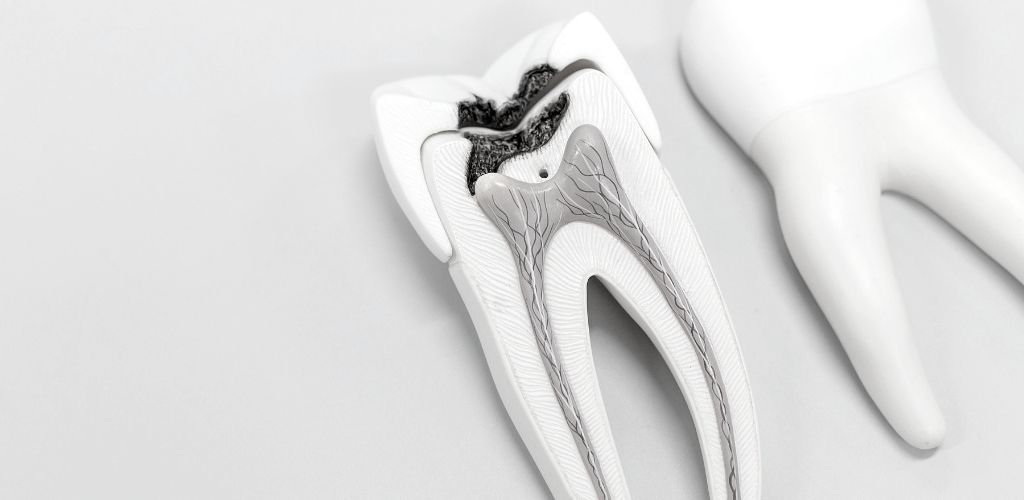
Endodontics is the speciality of dentistry that deals with the tooth pulp and tissues surrounding the root of a tooth. The pulp, which contains nerves; arterioles and venules as well as lymphatic tissue and fibrous tissue, can become diseased or injured and thus is unable to repair itself. The pulp then dies and endodontic or root canal treatment is required .

What does ROOT CANAL TREATMENT mean?
  • During root canal treatment, the infected pulp is removed and inside of the tooth is carefully cleaned, filed and sealed.
  • Following this, tooth is restored with a crown. The tooth continues to function like any other tooth.
  • With proper care, most teeth that have had root canal treatment can last a lifetime.
  • If so, you’re not alone.
  • Millions of teeth are treated and saved each year with root canal treatment.
  • Efficient chewing
  • Natural appearance
  • Root canal treatment is needed when pulp has been damaged by a bacterial infection.
  • The symptoms of pulp infection include:
    •  Pain when eating hot or cold food or drinks
    •  Pain when biting or chewing
    •  A loose tooth

As the infection progresses, these symptoms often disappear as the pulp dies. Your tooth might appear to have healed, but the infection has in fact spread through the root canal system. Further symptoms:

  • Pain when biting or chewing
  • Swelling of the gums near the infected tooth
  • Pus oozing from the infected tooth
  • Facial swelling
  • Tooth becoming a darker colour
  • There is a missing tooth. Adjacent teeth are endodontically treated and used to form a bridge.
  • Supraerupted tooth. Seen in case of a mssing tooth in the opposite arch. Supraerupted tooth is endodontically treated and crowned to bring it in occlusion.
  • Sensitive to various food and beverages.

It’s important to see your dentist if you develop toothache. If your tooth is infected, the pulp can’t heal by itself.

  • With proper care, RCT can last a lifetime. But sometimes, the tooth can become painful months or even years after treatment.
  • If your tooth failed to heal or develop new problems, you do have a second chance.
  • If you and your endodontist choose re treatment, the endodontist will re-open your tooth to gain access to the root canal filling.
  • Sometimes complex restorative materials- crowns, post and core must be disassembled and removed to permit access to root canals.
  • The endodontist cleans the canals, searches for additional canals or unusual anatomy that requires treatment.
  • After re treatment, get a new crown or other restoration placed on the tooth to protect and restore it to its full function.

If retreatment is not an option, ENDODONTIC SURGERY can be considered. This surgery involves making an incision that allows access to the tip of the root.

  • BLOCKED / INACCESSIBLE canals
  • Fracture / crack in the tooth’s roots

The procedure is normally only recommended after one or more root canal treatments have been attempted, and have failed. Since the problem occurs near the apex of the root, the procedure is often an effective way to treat a persistent infection.

While there are excellent methods of tooth replacement (like dental implants), which involve more complex treatment and they can be costly. An apicoectomy is generally a permanent and cost – effective solution which can help the tooth last for the rest of your life.

What is PERFORATION ?

  • Perforation is an artificial communication between root canal system and supporting tissues. It complicates treatment and affects prognosis IF NOT managed.
  • Can occur pathologically or unintentionally iatrogenically during root canal treatment.
  • The defect can be sealed using innumerable materials

Here, we use potent and dexterous materials like MTA and BIODENTINE to repair such defects and thus improve the prognosis and longevity of the tooth concerned.

  • During root canal treatment there might be unintentional separation of the instrument in the canal owing to various reasons like

    • Difficult canal curvature
    • Narrow calcified canal
    • Abnormal anatomy
    • Instrument manipulation

    These fractured instruments can be a hindrance to the goals of cleaning, shaping and filling root canals and thus affect the outcome of the treatment.

  • We use state- of- the -art equipment including ultrasonic to retrieve the separated instrument from the canal combined with magnification and illumination.
  • Bypass the instrument and clean and fill the canal to obtain a three dimensional hermetic seal.
  • The last 50 years have witnessed an unimaginable amount of change in restorative dentistry.
  • Creating illusions is one of the most important objectives of aesthetic dentistry.
  • Initial or recurring decay
  • Replacement of failed restorations
  • Abrasion or wearing a way of tooth structure
  • Erosion of tooth structure
  • Discoloration due to extrinsic or intrinsic staining
  • Anomalies due to developmental disturbances
  • Abnormal spacing between teeth.
  • Trauma
  • making your teeth whiter ( bleaching)
  • reshaping teeth (veneers),
  • fill cavities with tooth coloured materials (composites)
  • repair chips and rough spots


Thus provide you with a more refreshing smile and help boost your confidence and make you feel optimistic and self assured.

Visit us and let us help you discover the best aesthetic option that’s perfect for you.

Book your appointment now!

Our team will contact you asap!